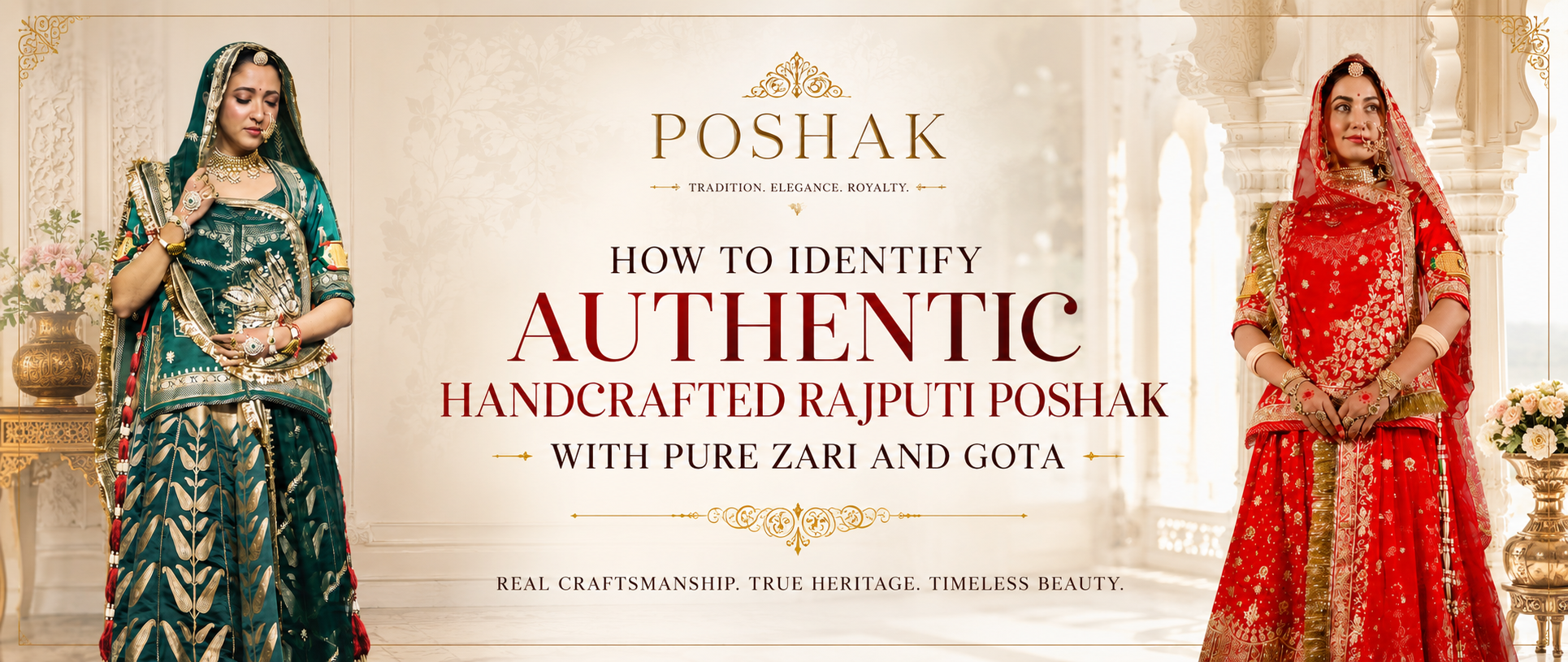
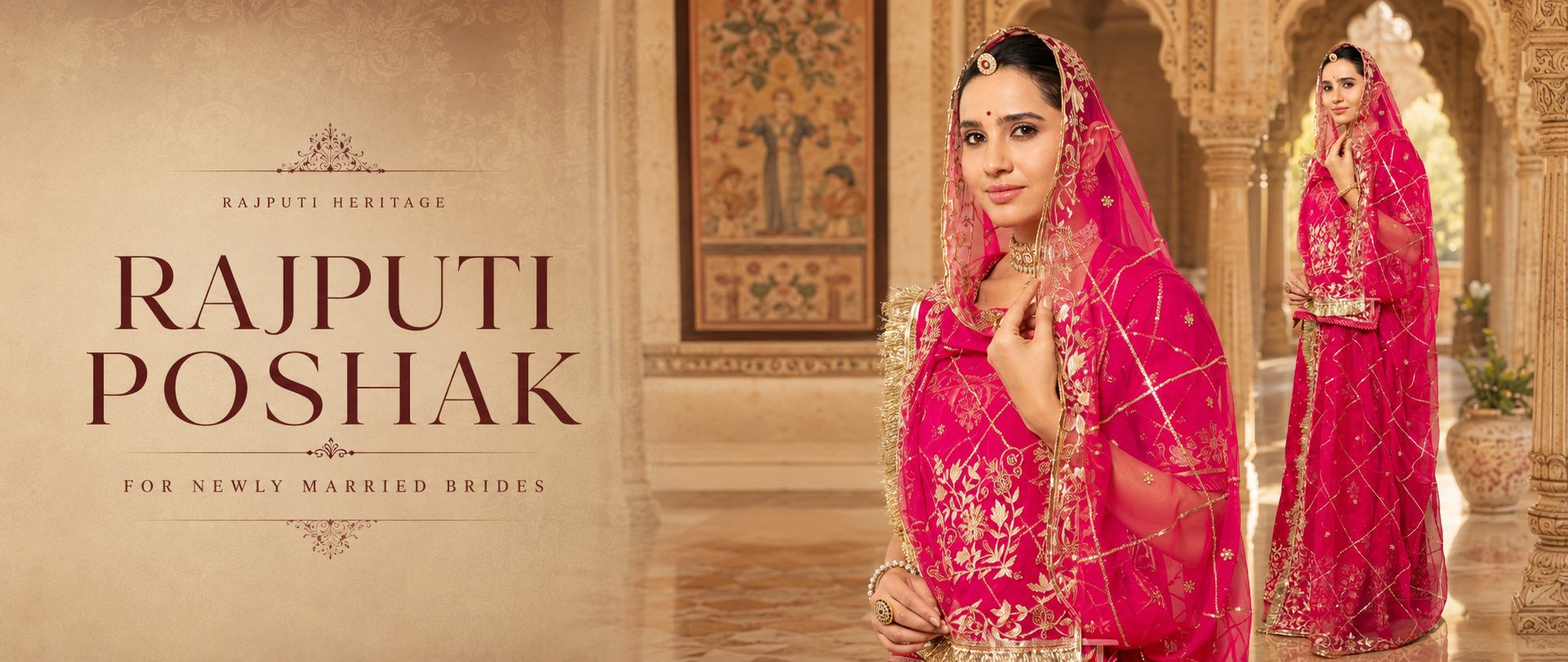
Why Luxurious Satin Poshak is Trending in Rajputi Bridal Fashion
If you have been paying attention to weddings in Rajasthan over the last couple of years, you have probably noticed something. More and more brides are showing up in satin poshaks. Not the stiff, old-school fabrics that felt heavy after an hour. The new satin is smooth, flowy, and almost impossibly rich-looking under any kind of light.
Rajputi bridal fashion has always been rooted in tradition. The silhouette, the embroidery, the odhni -none of that has changed. What has changed is the fabric conversation. And satin has quietly become the fabric that modern Rajputi brides are choosing over almost everything else.
There are real reasons behind this shift. Here is what is actually driving it.
Satin Does Something Other Fabrics Cannot
Every fabric has a personality. Cotton is casual. Georgette is floaty. Silk is classic. But satin has a quality that is genuinely difficult to replicate -it reflects light in a way that makes every colour look deeper and richer than it actually is.
Put a deep red poshak in satin and put the same red in a regular fabric. The satin version will look more vibrant, more royal, more expensive -even if both cost the same. That visual depth is exactly what Rajputi bridal fashion has always been about, and satin delivers it without any extra effort.
For brides who want to look stunning in photographs -and every bride does -satin is simply the smarter fabric choice.
Why Satin Works So Well for Rajputi Embroidery
One thing most people do not think about when choosing a poshak fabric is how the fabric interacts with the embroidery on top of it.
Traditional Rajputi embroidery -Gota Patti, Zari, Dabka, Aari work -involves metallic threads, ribbons, and heavy handwork. On a rough or matte fabric, this embroidery sits on top but does not fully shine. On satin, the smooth surface creates a contrast that makes every embroidery element pop.
The metallic threads catch the light. The Gota ribbon sits flat and clean. The Aari work reads clearly against the smooth background. The whole combination looks more expensive and more finished on satin than on any other base fabric.
This is a big reason why Rajputi bridal fashion has shifted toward satin -the embroidery that has always been part of the tradition simply looks better on it.
The Comfort Factor Is Real
Bridal functions in Rajasthan are not short. A wedding can span multiple days, long ceremonies, hours of sitting through rituals, and then hours more of dancing and celebrating. A bride needs an outfit that keeps up with all of that.
Heavier traditional fabrics like brocade or thick silk are gorgeous but genuinely tiring to wear over a long period. Satin is lighter than it looks. It has a natural drape that does not fight the body, and it does not trap heat the way some heavier fabrics do.
For a bride going through the full schedule of a Rajputi wedding -from the morning rituals to the late-night celebrations -that comfort difference is very real. Modern brides in Rajputi bridal fashion are not willing to suffer for their outfit, and satin means they do not have to.
How Satin Handles Colour Better Than Most Fabrics
Colour is central to Rajputi bridal fashion. The deep reds, the rich pinks, the royal blues and emerald greens -these colours carry cultural significance and centuries of tradition behind them.
Satin holds dye exceptionally well. The colours on a satin poshak stay true and vibrant wash after wash, function after function. There is no fading at the folds, no colour loss at the seams, no dullness developing over time.
On top of that, the way satin interacts with light means the colour actually looks different as the bride moves. A satin poshak in rani pink looks slightly different when the bride is standing still versus when she is moving -the light hits different sections of the fabric at different angles. That kind of visual interest is something flat matte fabrics simply cannot produce.
Satin Photographs the Way Brides Want to Be Photographed
Wedding photography has changed completely. Every bride today has a photographer, a videographer, and fifty phones pointed at her from every direction. The outfit needs to perform under studio lighting, natural outdoor light, artificial evening lighting, and flash -all in the same day.
Satin handles all of these conditions better than almost any other fabric. The sheen adapts to the light source. It does not wash out under flash. It does not look flat in natural light. And under warm evening lighting, a satin poshak looks genuinely cinematic.
This is something brides who have worn satin consistently mention -their wedding photos looked better than they expected, and the fabric had a lot to do with it. In modern Rajputi bridal fashion, where the visual documentation of a wedding is almost as important as the wedding itself, this matters enormously.
The Styles That Are Trending Right Now
Within the broader satin poshak trend, a few specific styles are standing out in Rajputi bridal fashion right now:
-
Deep reds and surkh shades in satin with heavy Dabka and Salma handwork -the most traditional combination and still the most popular
-
Rani pink satin with Aari and sequin work -a slightly softer bridal choice that still reads as fully traditional
-
Dual-tone satin poshaks -where the ghagra and kanchli are in two complementary shades, creating a layered look
-
Olive and muted tones in satin -for brides who want to move away from the standard bridal colours while staying within traditional aesthetics
-
Heavy Gota Patti borders on satin ghagras -the smooth base makes the Gota stand out in a way that no other fabric achieves
Each of these styles keeps the Rajputi bridal fashion foundation intact while using satin to elevate the overall effect.
What to Check When Buying a Satin Poshak
Not all satin is the same quality. A few things worth checking before buying:
-
The fabric should feel smooth and cool to the touch, not rough or slightly sticky
-
Good satin has a visible sheen but does not look plasticky or overly shiny
-
Check how the fabric falls -quality satin drapes cleanly, cheap satin bunches and creases unevenly
-
Look at how the embroidery sits on the fabric -it should lie flat and even, not pulling or puckering the satin underneath
-
Check the inner lining -a good satin poshak will have a proper inner layer that prevents the outer fabric from sitting directly on the skin
The Bottom Line
Satin's rise in Rajputi bridal fashion is not a passing trend. It solves real problems that traditional fabrics have always had -the weight, the comfort over long functions, and the way photography demands more from an outfit today than it did a generation ago.
The tradition stays intact. The embroidery, the silhouette, the cultural significance of the poshak -none of that changes with satin. What changes is how all of that looks in person and in photographs. And for a modern Rajputi bride, that upgrade is completely worth it.
Explore our exclusive Rajputi Poshak collection designed for modern royal brides.
Frequently Asked Questions
Q1. Is satin a traditional fabric in Rajputi wear or is it a new addition?
It is relatively newer compared to older fabrics like cotton or raw silk. But it has been adopted into the tradition quickly because it complements Rajputi embroidery styles so well.
Q2. Does satin tear or damage easily with heavy embroidery on it?
Quality satin with a proper lining holds embroidery very well. The key is making sure the poshak has a good inner layer so the weight of the embroidery is distributed properly.
Q3. How do I wash a satin poshak with heavy embroidery?
Dry cleaning is always the safest option. Do not machine wash or wring a satin poshak -the fabric loses its sheen, and the embroidery can loosen.
Q4. Is satin comfortable in Rajasthan's summer heat?
Satin is lighter than brocade or heavy silk, so it is relatively more manageable. For very hot outdoor weddings, ask for a satin blend with a breathable lining rather than a fully dense satin.
Q5. Can a satin poshak be altered if the size is slightly off?
Yes, most satin poshaks have enough margin for minor alterations. Satin is also easier to alter than some heavier fabrics because it does not fray as badly when cut.
Be part of Yuvti on Facebook & Instagram for next-level Rajputi bridal looks and exclusive reveals.