Best Rajputi Poshak Leheriya Color Combinations for Every Occasion
Rajputi Poshak Leheriya works best when the color matches the occasion, fabric, and time of day. A wedding calls for something bold. A Tuesday afternoon at home does not.
Leheriya comes from Rajasthan and is made using a tie-dye technique that produces diagonal wave patterns across the fabric. No two dye batches turn out quite the same.
Here's how to think about color choices across weddings, festivals, and daily wear.
What Is Rajputi Poshak Leheriya?
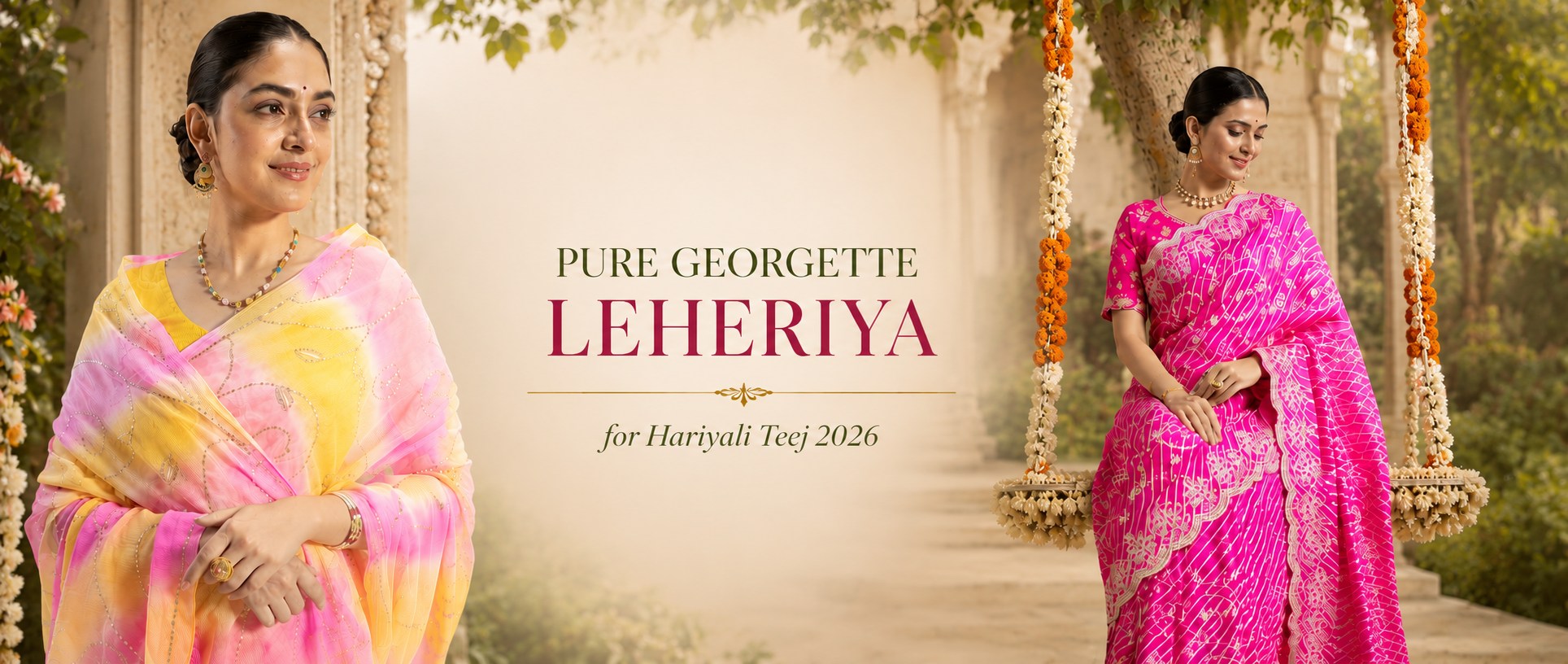
Think of it as the traditional Rajasthani outfit built around leheriya - the tie-dye process that leaves those diagonal, wave-like color bands running across the fabric.
The way it works is pretty hands-on. Someone ties off small sections of fabric before it goes into the dye, and depending on how tight those knots are and where they're placed, the wave pattern comes out a little different every time. Even two pieces dyed together won't be identical if you look closely.
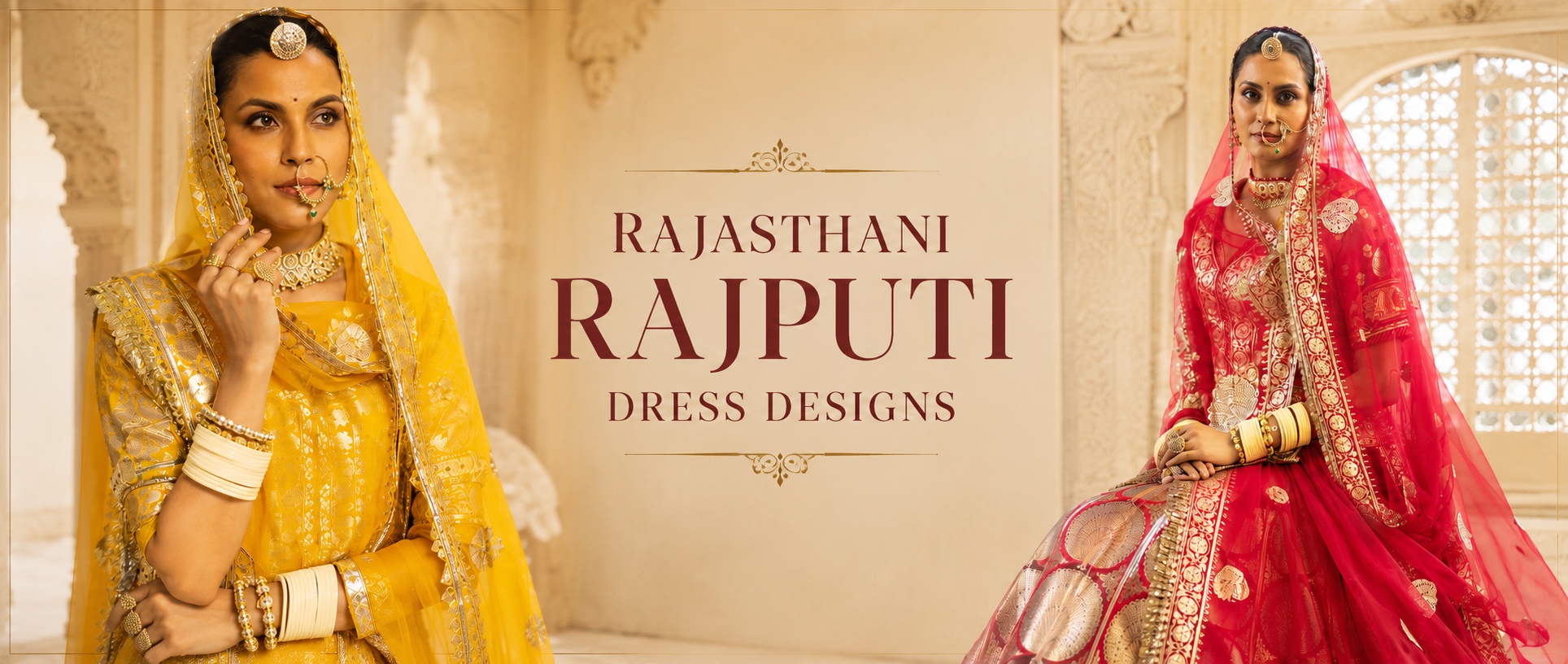
Most outfits come as a set of three. There's the kanchli or kurti, which is a fitted blouse. Then the ghagra, a long flowing skirt. And finally, the odhana or dupatta, which pulls the whole drape together.
Which Colors Suit Weddings Best?
Deep, saturated tones hold up better under wedding lighting - usually warm bulbs mixed with stage spotlights that wash out pale colors.
Maroon with gold gotta work has been dependable for years, reading as formal without trying too hard. A maroon satin piece with gotta detailing suits evening ceremonies - this maroon satin gotta work odhana leans traditional without feeling outdated.

Deep red with silver zari, or royal blue with gold thread, also photograph well.
What Works Best for Festival Occasions?
Festivals allow brighter, more playful combinations than a wedding typically does.
Yellow and orange bring an energetic feel suited to Teej, Gangaur, or Holi mornings, when gatherings mostly happen outdoors in daylight. A yellow georgette piece with zardozi handwork suits this setting - take a look at this yellow georgette zardozi handwork odhana for something festive without going over the top.
Pink with green, or turquoise with magenta, also holds up well outdoors.
How Should You Choose Rajputi Poshak Leheriya Color for Daily Wear?
Comfort matters more than drama for everyday use, so lighter shades work better.
Pastels like sky blue with white, or mint with cream, stay breathable through a long day and still look put together for family visits.
A sky blue satin piece with pitan work detailing fits this category - this sky blue satin gotta pitan work odhana adds shine without tipping into formal territory.

Lavender with grey, or peach with beige, work well too.
Which Fabric Fits Which Occasion?
Fabric changes both comfort and how a color combination reads once someone is actually wearing it.
Georgette breathes better in warm weather, which is why it dominates daytime festival wear. Satin catches light in a way georgette doesn't, which is why it shows up so often at weddings and evening functions.
As a rough guide: satin in maroon or royal blue for weddings, georgette in yellow or orange for festivals, cotton or georgette in sky blue or mint for daily wear, satin silk in midori or teal for evening functions, and pure georgette with sequins for sangeet or mehendi nights.
For evening functions, a satin silk midori piece catches light nicely after dark - this satin silk midori poshak works across several evening settings.

How Do You Style Rajputi Poshak Leheriya for Different Occasions?
Jewelry and draping style change the overall look almost as much as fabric color.
Weddings call for statement pieces - kundan or temple jewelry pairs naturally with heavier fabrics like satin. Festivals lean lighter, where oxidized silver holds its own against brighter colors.
A few small things make a noticeable difference:
- Match bangles to the dominant shade
- Stick to traditional footwear like mojaris or juttis
- Pick a bindi shade that complements the outfit
Sangeet and mehendi nights call for something more festive - a pure georgette piece with sequins and zardozi jaal work earns its place here. This pure georgette yellow leheriya aari sequins zardozi jaal work poshak holds up well through hours of dancing.

Where Should You Buy Rajputi Poshak Leheriya Online?
Stick with sellers who focus on Rajasthani craftsmanship rather than general ethnic wear stores.
Look closely at the dye work in photos - genuine leheriya has slight irregularities since it's hand-tied, not printed. A pattern that looks too perfect is worth a second look.
Real customer reviews and close-up fabric photos save most of the guesswork.
Frequently Asked Questions
Q1. Why do leheriya patterns look slightly uneven?
The pattern comes from hand-tying fabric before dyeing, so small irregularities are normal.
Q2. Which color works best for a first purchase?
Maroon or sky blue suit the widest range of occasions.
Q3. Is this outfit practical for daily wear?
Yes, lighter fabrics and pastel tones handle everyday use well.
Q4. Which fabric photographs best at weddings?
Satin, since it catches indoor and stage lighting better than most fabrics.
Q5. Does it suit festivals besides Teej?
Yes, the same styles work for Gangaur, Holi, and other Rajasthani festivals.
Follow us on Facebook and Instagram for the latest Rajputi Poshak styles, festive color inspiration, and new arrivals.